00:00:00
one|Lesson 21~30
Lesson 21~22
✨课文
Preview
是否显示中文翻译
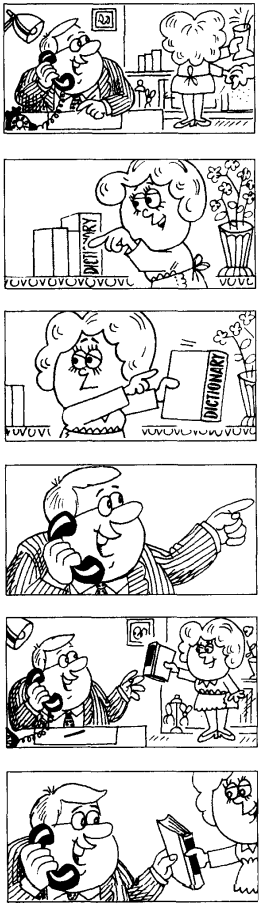
Man: Give me a book please, Jane.
Woman: Which book?
Woman: This one?
Man: No, not that one. The red one.
Woman: This one?
Man: Yes, please.
Woman: Here you are.
Man: Thank you.
课文理解
✨单词
⚡本课重点
which引导的特殊疑问句:用来询问事物或性质,需要从限定的、特指的范围中做出选择
- e.g. This is my book. => Is this your book? => Which is your book?
先把陈述句中的be动词提到句首得到一般疑问句,再用which对一般疑问句中的答案this进行提问,并将which提到句首
不定代词one:用来代替前文出现过的人称代词或可数名词,以免重复。它有复数形式ones,可以和冠词连用,也可以有自己的定语
one、that和it之间的区别:one表示泛指,that和it表示特指,that与所指的名词为同类,但不是同一个,而it与所指的名词是同一个
Lesson 23~24
✨课文
Preview
是否显示中文翻译
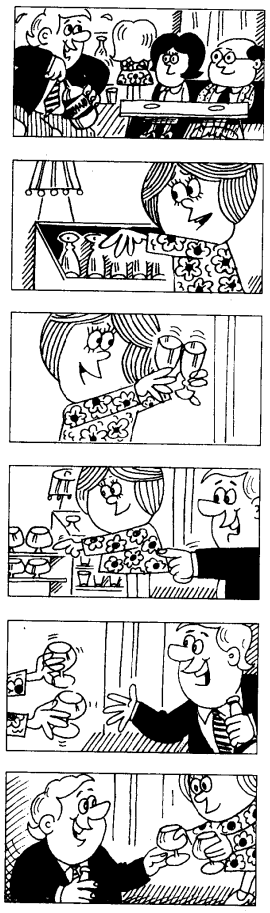
Man: Give me some glasses please, Jane.
Woman: Which glasses?
Woman: These glasses?
Man: No, not those. The ones on the shelf.
Woman: These?
Man: Yes, please.
Woman: Here you are.
Man: Thanks.
✨单词
双宾语
⚡本课重点
双宾语:有些动词可以有两个宾语,往往一个指代人,一个指代物。指人的叫「间接宾语」,指物的叫「直接宾语」
间接宾语一般放在直接宾语的前面,人要用代词的宾格。
give sb. sth.e.g. give me money
如果直接宾语是个人称代词时,就需要在间接宾语的前面加上介词
to,并把这个带to的间接宾语放在直接宾语的后面。give sth. to sb.e.g. give it to me
give sb. sth.等价于give sth. to sb.,两者是同义结构,可以相互转换当直接宾语是名词时,它既可以放在间接宾语的后面,也可以在间接宾语的前面加
to,并把这个带to的间接宾语放在直接宾语的后面
where引导的特殊疑问句:
- e.g. My book is on the shelf. => Is my book on the shelf? => Where is my book?
先把陈述句中的be动词提到句首得到一般疑问句,再用where对一般疑问句中的答案on the shelf进行提问,并将where提到句首
介词on:经常用在名词、名词短语、代词或动名词的前面,用来表示人物、事件等之间的各种关系,如空间关系、时间关系、因果关系等。介词始终带有宾语,即使介词与宾语之间分隔开时,这种关系仍然存在
介词短语:介词+名词(+介词)
- e.g. on time、in the middle of
介词不能在句子中独立充当一个成分,需要和一个名词或与之相当的词构成介词短语来充当句子中的一个成分,和介词构成短语的那个部分称为「介词的宾语」
on在不同的搭配情况下有不同的含义
在一个平面或线上
e.g. on the table
在某一个不精确的时间
e.g. on Monday
Lesson 25~26
✨课文
Preview
是否显示中文翻译
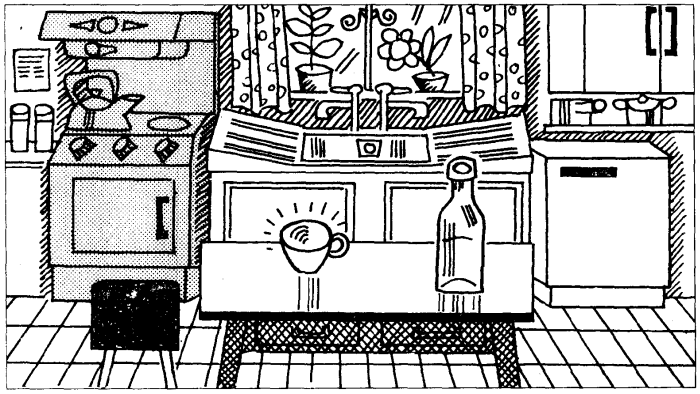
Mrs Smith's kitchen is small.
There is a refrigerator in the kitchen.
The refrigerator is white.
It is on the right.
There is an eletric cooker in the kitchen.
The cooker is blue.
It is on the left.
There is a table in the middle of the room.
There is a bottle on the table.
The bottle is empty.
There is cup on the table, too.
The cup is clean.
课文理解
✨单词
⚡本课重点
介词in:表示「地点、场所、部位」等,它的用法很多,本课学习的是其「在…里面」的意思
在某范围或空间内
e.g. There is a refrigerator in the kitchen.
在某一段时间内
e.g. in the morning
定冠词the:表示特指,不论是指人、物、单数、复数,其形式都不会发生变化。与指示代词this和that同源,有「这(那)个」的意思,但较弱,可以和一个名词连用,来表示某个或某些特定的人或物。
场景的使用场景如下
- 特指双方都明白的人或物
- 前文提到过的人或物
- 世上独一无二的事物
- 与单数名词连用时表示一类事物;与形容词、分词连用时表示一类人
- 用在数词、形容词最高级、
only、very、same等前面 - 与复数名词连用时表示整个群体
- 用在身体部位的名词前面时,相当于物主代词,表示「所有」
- 用在某些由普通名词构成的国家名称、机关团体、阶级等专用名词前面
- 用在表示乐器的名词前面
- 用在姓氏的复数名词前面,表示一家人
- 用在惯用语中
the在元音前读/ði/,e.g. the engineer
the在辅音前读/ðə/,e.g. the floor
Lesson 27~28
✨课文
Preview
是否显示中文翻译
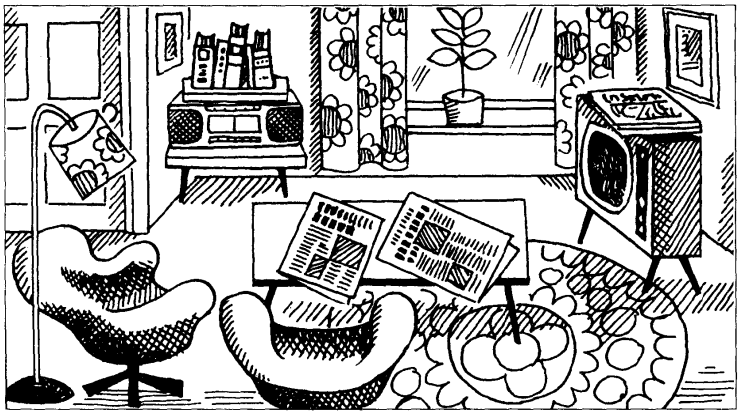
Mrs Smith's living room is large.
There is a television in the room.
The television is near the window.
There are some magazines on the television.
There is a table in the room.
There are some newspapers on the table.
There are some armchairs in the room.
The armchairs are near the table.
There is a stereo in the room.
The stereo is near the door.
There are some books on the stereo.
There are some pictures in the room.
The pictures are on the wall.
课文理解
✨单词
⚡本课重点
how many引导的特殊疑问句:用来询问数量
- e.g. There are two books on the desk. => Are there two books on the desk? =>
先把陈述句中的be动词提到句首得到一般疑问句,再用how many对一般疑问句中的答案two books进行提问,并将how many提到句首
some和any的区别:在英语中,some和any是两个最常用的数量词,它们都表示「一些」。再具体一点话some表示「某些」,any表示「任一」
some:修饰可数名词复数和不可数名词,表示「某些」但不是「全部」,通常用于肯定句。在疑问句中,所希望的回答是yes时也可以用someany:表示「任一」,即不确定的数量,通常用于否定句和疑问句
Lesson 29~30
✨课文
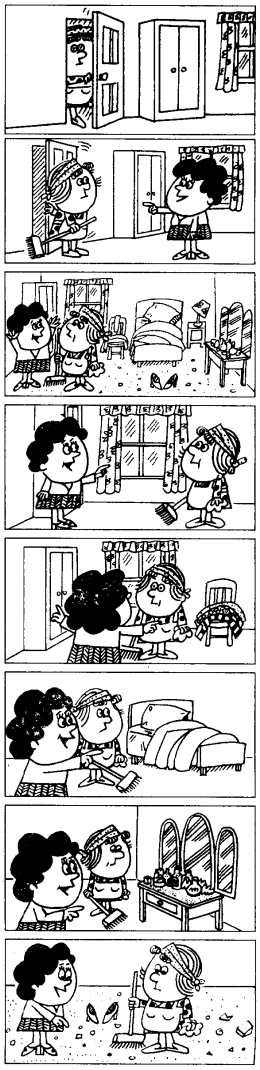
Preview
是否显示中文翻译
Mrs. Jones: Come in, Amy.
Mrs. Jones: Shut the door, please.
Mrs. Jones: This bedroom's very untidy.
Amy: What must I do, Mrs Jones?
Mrs. Jones: Open the window and air the room.
Mrs. Jones: Then put these clothes in the wardrobe.
Mrs. Jones: Then make the bed.
Mrs. Jones: Dust the dressing table.
Mrs. Jones: Then sweep the floor.
课文理解
✨单词
情态动词must
⚡本课重点
情态动词:是一种本身没有词义,表示说话人的语气和情态的助动词。
- 它不能单独做谓语,只能和后面的动词原形一起构成谓语动词
- 它没有人称和数的变化
- 含有情态动词的句子,否定句和疑问句都是在情态动词上发生变化
情态动词must:单词本义为「必须」。它必须与其他东西连用,没有时态、人称和数的变化
肯定句:表示必须做某事。
主语+must+V.(+其他)e.g. I must drink some water.
否定句:只需在
must的后面加上not即可。其否定形式表示「禁止」而不是简单的非必须,语气强烈,不要随便使用。主语+must not+V.(+其他)e.g. You mustn't smoke here.
一般疑问句:只需将
must提到句首(主语前面)即可。Must+主语+V.(+其他)e.g. Must I do the homework today?
特殊疑问句:在一般疑问句的句首加上特殊疑问词并去掉答案。
特殊疑问词+must+主语+V.(+其他)e.g. I must drink some water. => Must I drink some water? => What must I do?
先把陈述句中的
must提到句首得到一般疑问句,再用what对一般疑问句中的答案drink some water进行提问,并将what提到句首